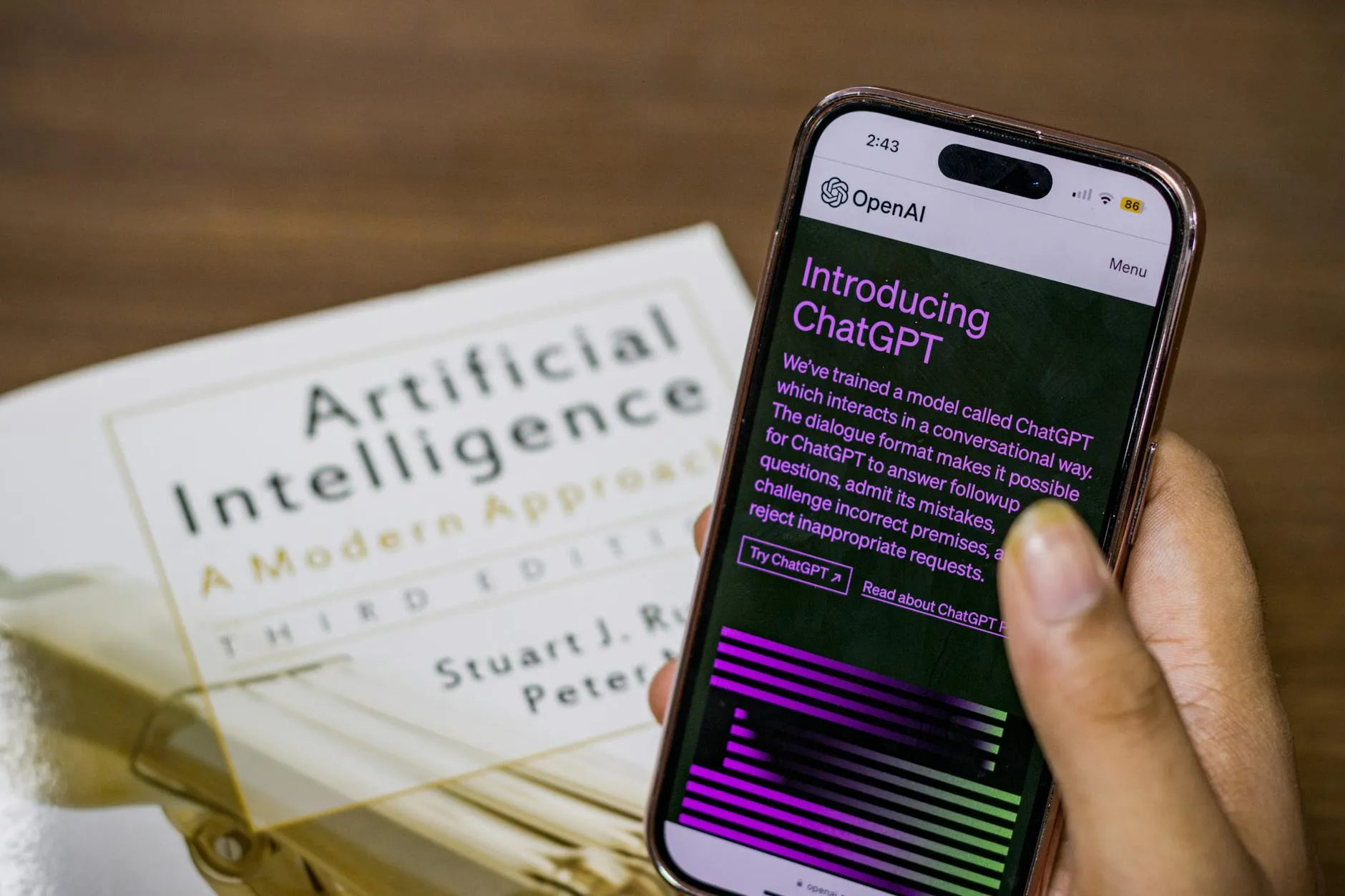

If you’ve just discovered artificial intelligence, you probably feel a mix of fascination and confusion. Most people believe that ChatGPT or Claude actually “think,” that they learn from your conversations, or that they can completely replace human work. The reality is very different, and that’s precisely why this article exists: to help you understand what NOT to do with AI in 2026 and debunk the false beliefs circulating on social media. The gap between expectations and reality is gigantic, and closing it is the first step to using these tools intelligently, ethically, and effectively.
| Common Myth | The Reality | Practical Implication |
|---|---|---|
| AI understands what you ask | Predicts word patterns based on pure mathematics | You need to be explicit and specific in your prompts |
| ChatGPT learns from my questions | It doesn’t update from your conversations (except aggregated analysis) | Your private data doesn’t directly improve the model |
| AI has real creativity | Combines training patterns probabilistically | Excellent for remixing, not for true originality |
| AI is always accurate | “Hallucinates” (invents data) regularly as an inherent flaw | Always verify critical information independently |
How Generative AI Really Works: Beyond the Magic
Imagine that for 20 years you’ve watched movies where every time it rains, someone opens an umbrella within the next 10 seconds. After watching thousands of movies, you could predict with some probability that if it starts raining, there will be an umbrella soon. That’s essentially what a neural network does.
AI misunderstandings for beginners start when we assume these models “understand” in the human sense. ChatGPT and Claude don’t understand anything. What they do is recognize statistical patterns in billions of words from the internet.
Here’s the real mechanism:
For a deeper analysis of how these systems work from the ground up, we recommend reading our guide on generative AI for beginners: what it is, how it works, and where to start in 2026.
The 5 Most Dangerous AI Hallucinations (and Why They Happen)

“Hallucination” in AI is a technical term meaning: when the model generates completely false information but presents it as true. It’s not a technical error; it’s an inherent flaw in how these systems work.
Why AI sometimes hallucinates and gives false information happens for a simple reason: the model was trained to generate the most probable and coherent response, not necessarily the most accurate one. If it didn’t see information about a topic, it simply invents something that sounds correct.
The most common errors include:
1. False quotes and attributions
You asked ChatGPT for an Albert Einstein quote and it gave you a perfectly formatted answer. Einstein never said that. The model predicted “what sounds like something Einstein would say” based on patterns, not real verification.
This is especially dangerous in academic or professional contexts where accuracy matters. If you write an article citing ChatGPT directly, you risk spreading misinformation.
2. Inventing numbers and statistics
“What percentage of the world population uses AI?” Here the model will generate a number that sounds reasonable: 34%, 47%, 56%. It could be completely wrong, but it will sound specific and trustworthy.
3. Confabulating historical or technical details
Ask about a specific date, the name of an obscure algorithm, or details of a rare event. The model will fill in the blanks with probabilities instead of real data.
4. Mixing real facts with fiction
This is particularly insidious: the answer starts with true information and then seamlessly transitions into inventions. Your brain trusts the first part and believes the rest too.
5. Not admitting it doesn’t know
Instead of saying “I don’t have information about that,” it will confidently speak about things it doesn’t know. Epistemic humility is not a default feature of ChatGPT or Claude.
To avoid these hallucinations:
- Always verify critical information with independent sources.
- Ask the AI to cite its sources specifically.
- Be suspicious of specific numerical data without context.
- Use more specialized tools for current information (recent searches).
- Never publish sensitive information without triple verification.
Common AI Usage Mistakes in 2026: What NOT to Do
Get the best AI insights weekly
Free, no spam, unsubscribe anytime
No spam. Unsubscribe anytime.
Here we arrive at the main reason you searched for AI for beginners mistakes. These aren’t just conceptual misunderstandings; they’re practices that can cost you money, reputation, or time.
Error #1: Completely delegating your critical thinking
The worst mistake is assuming that because ChatGPT Plus or Claude Pro gave you an answer, that answer is correct. These are assistants, not oracles. Think of them as an extremely fast but unreliable junior researcher.
What NOT to do: Write an important email, copy-paste it directly without reviewing. Make business analysis based solely on ChatGPT data. Make medical or legal decisions without professional verification.
Error #2: Not understanding that AI reflects training biases
The models were trained primarily on English-language internet content from developed countries with specific Western perspectives. This means they have built-in biases that aren’t bugs; they’re features of the dataset.
If you ask ChatGPT for advice on a specific cultural topic from a non-Western region, it likely has an incomplete or biased perspective.
Error #3: Ignoring privacy and confidentiality
Many beginners copy sensitive information (passwords, customer data, proprietary code) into regular ChatGPT because they don’t know that OpenAI can see that data. ChatGPT Plus offers a confidential mode, but the free version doesn’t.
With Claude Pro, there are greater privacy guarantees, but still: never paste truly sensitive information into public tools.
Error #4: Overestimating the speed of future improvement
You see videos on TikTok of AI doing incredible things and assume it will be 10 times better in 6 months. Reality: improvement is slower than it appears. Fundamental limitations persist.
This affects your career decisions: you shouldn’t abandon critical human skills because “AI will replace them in 2027.”
Error #5: Not documenting AI usage in professional contexts
If you use AI in academic or professional work, disclose it. Universities and employers now require transparency. Failing to do so is plagiarism or fraud, no matter how good your prompts are.
To better understand how to use AI ethically, consult our article on artificial intelligence for students 2026: 5 ways to use AI without it seeming like cheating.
Error #6: Ignoring temporal knowledge limitations
ChatGPT was trained through April 2024. Claude has information through early 2025. They don’t know what happened yesterday. If you need current information, SearchGPT or tools with real search are essential.
Error #7: Using AI for decisions requiring genuine empathy
AI is excellent at summarizing, explaining, generating ideas. It’s terrible at advising someone in emotional crisis, making important family decisions, or navigating complex ethical dilemmas. It has no lived experience or true empathy.
Myths About AI 2026 That Are Still Circulating
Social media is full of misinformation about AI. These are the most persistent myths and why they’re wrong:
Myth: “AI will steal my job in 6 months”
Nuanced reality: AI is automating specific components of jobs, not entire jobs. An accountant will still be necessary; part of their work (routine reconciliation) may be automated. Jobs that will be completely eliminated are less common than sensational press suggests.
Myth: “ChatGPT is superintelligent”
Reality: ChatGPT is a very sophisticated text predictor. It can’t truly design a bridge, can’t understand physics if it didn’t learn it from text patterns. If the test of true intelligence is solving new complex problems from first principles, ChatGPT remains limited.
Myth: “AI will soon be conscious”
Reality: We’re confusing sophistication with consciousness. A chatbot that responds well about emotions doesn’t feel them. There’s no evidence that current systems have subjective experience.
Myth: “Perfect prompts unlock AI’s true potential”
Partial reality: Good prompts matter, but there are limits. You can’t make ChatGPT do something fundamentally outside its capabilities just with perfect wording. It’s like believing the right question will make a scientific calculator solve differential equations; it simply doesn’t have that capability.
Myth: “Using AI for anything is cheating”
Reality: AI is a tool like Excel or Google. The right question isn’t “Did I use AI?” but “Did I use AI appropriately for this context?” Using AI for brainstorming isn’t cheating. Submitting AI-generated work as your own is.
The Real Limitations of ChatGPT and Claude That Nobody Mentions
Even OpenAI and Anthropic are beginning to be honest about limitations. Here are the true barriers:
Cannot understand ambiguous context
If your question has multiple interpretations, the AI will guess. It can’t ask clarifying questions with the flexibility a human would.
Has no real common sense
A 5-year-old understands that if you put a phone in water, it breaks. ChatGPT would need that information explicitly in its training. Common sense is surprisingly difficult to code into AI.
Slow at deep mathematical reasoning
If you need to verify a 50-step theorem proof, the AI will make errors. For high-level pure mathematics, you still need humans.
Cannot see fine image details (yet)
Current models can identify objects in photos, but cannot read small text in images or analyze very fine details reliably.
Suffers from “confident hallucinations” on specialized topics
In areas where ChatGPT has little training (very new science, specialized technology), it can invent confidently. It’s even more dangerous because it sounds like an expert.
Cannot actually execute or test code
It can write code that looks correct, but without actually running it and seeing if it works. It requires human verification.
For a more complete understanding of what you can realistically achieve, check out our foundational article artificial intelligence for beginners: what it is, how it works, and why everyone uses it in 2026.
How to Use AI Correctly: Practical Framework for Beginners

Now that you know what NOT to do, here’s how to use AI intelligently in 2026:
The VERIFY Framework
- V (Validate): Verify all critical information with independent sources.
- E (Evaluate): Assess whether the AI response makes sense in context. Does it have obvious gaps? Does it sound overconfident?
- R (Reflect): Reflect on whether you actually needed AI for this or were just being lazy.
- I (Iterate): Iterate with better prompts if the first response was mediocre.
- F (Format): Format the output appropriately for your use case. Don’t blindly copy-paste.
- Y (Yield): Document that you used AI if it’s a professional or academic context.
Use cases where AI really excels
Brainstorming and idea generation: “Give me 20 blog title ideas about AI for students.” Perfect for AI.
Explanation and teaching: “Explain how transformers work without technical jargon.” AI is excellent when its job is educational.
Initial content drafting: “Write a draft email apologizing for a delay.” It’s a starting point, not a final product.
Coding assistance: “Write a Python function that sorts an array.” AI helps, but verify the code.
Basic data analysis: “Tell me what you see in this data” when you have a CSV. It’s like having a junior assistant.
When absolutely NOT to use AI
- Medical decisions without professional supervision.
- Legal advice without a real lawyer.
- Sensitive personal financial information.
- Anything where confidentiality is absolute.
- Areas where novelty is critical (cutting-edge science).
- Work requiring genuine personal accountability.
To learn specifically how to structure your learning without typical mistakes, check out artificial intelligence for beginners 2026: learn from scratch without needing to program.
Recommended Tools and How to Choose Between Them in 2026
There are dozens of AI tools, but for beginners avoiding common mistakes, these are the best:
ChatGPT vs ChatGPT Plus
ChatGPT (free): Access to GPT-4, but limited in speed and queries. It’s enough for learning.
ChatGPT Plus ($20/month): Priority access, faster. Worth it if you use AI professionally. But be careful: it’s still susceptible to hallucinations.
Claude (free) vs Claude Pro
Claude (free): Access to Claude 3.5 Sonnet, reasonably powerful. Better privacy than free ChatGPT.
Claude Pro ($20/month): More queries, priority access. Many users report it’s better for reasoning than GPT-4. If you’re torn between Claude Pro and ChatGPT Plus, Claude Pro excels for deep analysis and writing.
Specialized tools
Perplexity AI: Real-time search. Better for current information. Solves the “I don’t know what happened yesterday” problem.
Copilot Pro: Integration with Microsoft 365. Useful if you work in the Windows/Office ecosystem.
Gemini Advanced: Google’s answer. Integration with Google services, including YouTube.
For structured learning: Coursera
If your goal is to understand AI scientifically, not just use it, Coursera has certified courses. Andrew Ng’s Machine Learning courses are industry standard, though advanced. For beginners without programming, look for “AI Literacy” or “Understanding AI” courses.
For key concepts without advanced technique, we also recommend artificial intelligence for beginners: 7 key concepts explained without jargon 2026.
The Future of AI and How to Prepare Without Making Typical Mistakes
In 2026 and beyond, AI mistakes for beginners will be less common as technology becomes more integrated into education. But new mistakes will emerge. Here’s how to prepare:
Learn “AI literacy,” not just “how to use ChatGPT”
Knowing ChatGPT is useful, but it’s like knowing Word in 1998. Real value comes from understanding what AI is, what it can and cannot do, and how it fits into your professional life.
Develop healthy skepticism
The best defense against AI mistakes is educated distrust. If something sounds too good to be true, it probably is. If the AI is overconfident, it’s probably hallucinating.
Maintain your critical human skills
Critical analysis, clear writing, interpersonal communication, genuine creativity: these won’t disappear. AI complements them; it doesn’t replace them. Invest in improving these skills, don’t abandon them.
Be ethical from the start
Early AI users who develop ethical habits now will be ahead when transparency about AI use becomes mandatory.
Keep evolving
Tools will change. In 2027 there will be something better than ChatGPT or Claude. The important thing is not to get stuck thinking “this is how ChatGPT works” but to understand underlying principles.
Conclusion: The Intelligent Path to Understanding AI for Beginners Mistakes
You came here searching for AI for beginners mistakes and I hope I’ve answered your real question: it’s not that you don’t understand how AI works; it’s that everyone else has wrong ideas that seem backed by slick marketing and TikTok videos.
The reality is that AI isn’t magic, it’s extremely sophisticated mathematics. It doesn’t understand, it predicts. It doesn’t think, it computes. It isn’t conscious, it’s statistics.
But that doesn’t make it useless. It’s like learning that electricity is “electrons moving”; once you understand the mechanism, you can use it better.
Your next steps:
- Try free ChatGPT or free Claude. Experiment. Break things. Discover its limits.
- Read the articles we’ve linked throughout: from how generative works to ethical use for students.
- If you feel you need to go deeper, consider a Coursera course. It doesn’t need to be advanced; an “AI Literacy” course is enough.
- Adopt the VERIFY framework for each important AI use.
- Teach others what you learned. Explain to someone why “ChatGPT hallucinations” is normal, not a bug.
The difference between using AI as an intelligent tool and falling into common traps is simply understanding. And you’ve just taken the first step.
Frequently Asked Questions (FAQ)
Why does it feel like AI understands what I’m asking if it’s just math?
Because the math is extremely sophisticated. When a model was trained on billions of examples, it can learn patterns so complex that they seem like understanding. For example: if for 30 years you only saw people ask “How are you?” and respond with “Good, and you?”, without ever experiencing emotions, you could perfectly predict the sequence. That’s what AI does: predicts word sequences that typically go together. Your intuition says “understands”; the reality is “knows statistically what comes next.”
Is it true that ChatGPT learns from my questions?
Not in the way you think. Free ChatGPT doesn’t update from your questions. Each conversation is independent; the model doesn’t improve reading your prompts. OpenAI does analyze conversations in aggregate to improve future models, but your personal ChatGPT remains the same base model. With ChatGPT Plus you have slightly better privacy guarantees, but the mechanism is fundamentally similar. Claude Pro offers more explicit confidentiality. The important thing: don’t paste passwords or secret data thinking “at least the model will learn to protect that better.”
Does generative AI really have creativity?
Define “creativity.” If creativity means “combining elements in new ways based on learned patterns,” then yes. A generative model is exceptional at that. It can write a poem about a melancholic robot because it’s seen sad poems, robots in data, and knows statistically what words go together in that context. But if creativity means “generating something truly new that would violate physics laws” or “an idea nobody ever had,” probably not. It’s creative remixing versus true innovation. For most practical uses, creative remixing is valuable and sufficient.
Why does AI sometimes give me completely false answers?
Because “hallucinations” is an inherent flaw, not a bug. The model was trained to maximize coherence and fluidity, not accuracy. If it lacks information on a topic (especially if it’s obscure, new, or specific to your local context), it simply generates what seems plausible. It’s like asking someone to write an article on quantum physics without studying it; they’d write something that sounds scientific but be inventing details. With Claude Pro you get a model that declares uncertainty more often, but hallucinations remain possible. Defense: always verify important information.
Should I let AI do ALL my work?
No. Absolutely not. There’s a spectrum: on one end, using AI for repetitive administrative tasks (“generate 10 email subject lines”) is smart. On the other end, submitting completely AI-generated work as your own is plagiarism or fraud. The question you should ask: “If I removed AI from this task, am I still competent?” If the answer is no, you’re atrophying your skills. Human skills in critical thinking, genuine creativity, and personal responsibility are still your most valuable professional assets. USE AI as augmentation, not replacement.
What’s better: ChatGPT Plus or Claude Pro?
Depends on your use case. ChatGPT Plus has better internet integration (search), is more well-known, has more plugins. Claude Pro is better for deep analysis, long-form writing, and offers more explicit privacy. For beginners, I recommend starting free (both have decent free versions), then experimenting with each before paying. If I must recommend: for deep analysis and writing, Claude Pro. For search and versatility, ChatGPT Plus.
Can I use AI at work without telling my boss?
It’s not a good idea, even if technically allowed. First, most companies now have clear AI policies. Second, if they discover you used AI without mentioning it, it’s worse than admitting it proactively. Third, transparency is increasingly a legal/ethical requirement. Better: ask your boss what the AI policy is, then use transparently. You’ll say “I used ChatGPT for X because Y” and that’s probably fine.
Do I need to learn programming to understand AI?
Not necessarily. You can understand conceptually how it works without programming. But if you want to understand “really,” programming helps a lot. A course like Andrew Ng’s on Coursera requires Python but teaches principles rigorously. For conceptual understanding without code, there are non-technical resources. My recommendation: start without code. If you feel curious afterward, learn basic Python.
Looking for more tools? Check out our selection of recommended AI tools for 2026 →
The AI Guide — Our content is developed from official sources, documentation, and verified user opinions. We may receive commissions through affiliate links.