Introduction: The Hidden Cost of Your AI Conversation
Every time you type a question into ChatGPT, Claude, or Gemini, something invisible happens in massive data centers scattered across the planet. Your 30-second question consumes liters of water. It’s not an exaggeration. In 2026, understanding how AI uses water has become a responsibility that goes beyond tech curiosity—it’s an act of environmental awareness.
But here’s what matters: most users don’t know WHY this happens. You see numbers about ChatGPT’s water consumption, you get worried, and keep using the tool without truly understanding the mechanism. This guide changes that. We’re not just showing you statistics; we’re explaining the complete chain of why AI uses so much water, how the data centers that power it work, and what you can do as a conscious user.
We’ll compare three giants directly—ChatGPT (OpenAI), Claude (Anthropic), and Gemini (Google)—so you see the real differences. By the end, you’ll have actionable tools to make informed decisions based on real knowledge, not guilt.
Why Generative AI Consumes So Much Water: The Mechanism Behind the Scenes

To understand how much water ChatGPT consumes or any AI model, you first need to visualize what’s actually happening when you ask a question. It’s not ethereal cloud magic. It’s massive physical infrastructure in specific locations with very real needs.
Related Articles
→ How Much Water Do ChatGPT and Claude Consume: The Real Environmental Cost in 2026
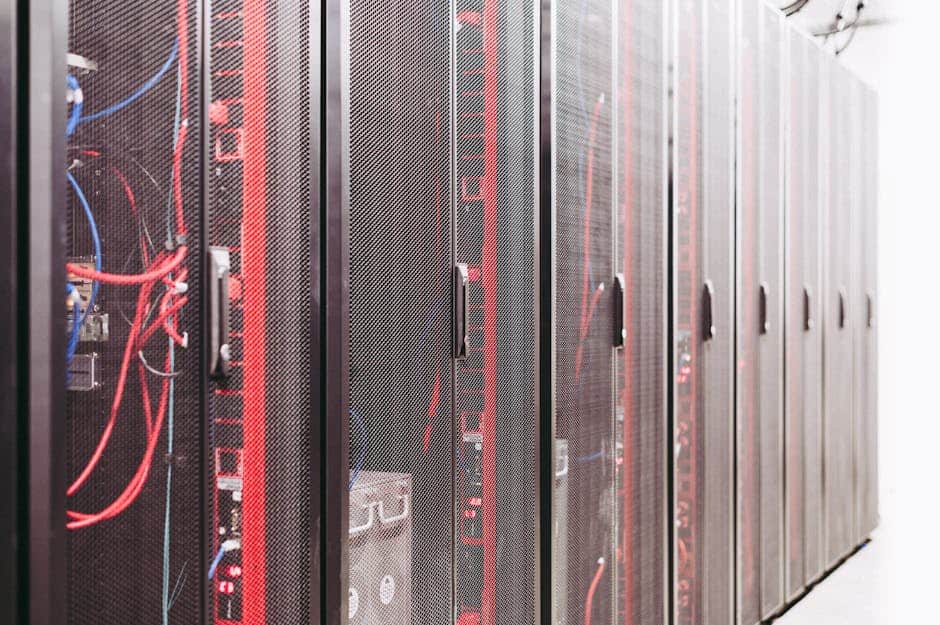
When your question reaches the servers, millions of mathematical operations happen simultaneously. These calculations generate extreme heat. Imagine thousands of GPUs and TPUs running at maximum capacity. The most powerful processor in your computer generates heat; now multiply that by tens of thousands of units working together.
Water enters here. Data centers can’t allow their servers to overheat. An AI processor can burn out in seconds if it reaches critical temperatures. So data centers invest massive resources in water-based cooling systems. This is the central point: most water consumed isn’t for “training” the model in the technical sense, but for keeping infrastructure at operable temperatures.
Watch: Explainer Video
There are two main methods:
- Direct cooling: Water circulates directly through pipes connected to servers, absorbing heat.
- Cooling tower evaporation: Water evaporates in large towers (similar to nuclear plants), dissipating heat to the atmosphere.
The second method is especially efficient in dry climates but also most visible in water consumption: you literally see water disappear as vapor. In 2026, most mega data centers use combinations of both methods, adjusting based on geographic location and water availability.
Direct Comparison: ChatGPT, Claude, and Gemini Water Consumption
Get the best AI insights weekly
Free, no spam, unsubscribe anytime
No spam. Unsubscribe anytime.
The table below summarizes what we know about AI’s environmental impact in 2026 and specifically these three major models’ water consumption.
| Feature | ChatGPT (OpenAI) | Claude (Anthropic) | Gemini (Google) |
|---|---|---|---|
| Liters of water per query (estimated) | 0.5-2 liters | 0.3-1.5 liters | 0.4-1.8 liters |
| Energy consumption per query | 0.005-0.01 kWh | 0.003-0.008 kWh | 0.004-0.009 kWh |
| Renewable energy proportion | ~30-40% | ~50-60% | ~60-70% |
| Primary data center locations | Virginia, Iowa, others | North Carolina, Oregon | South Carolina, Iowa, international |
| Transparency on water consumption | Low | Medium-High | High |
What do you see in these numbers? First, there are no drastic differences between the three. All consume similar water amounts because they all face the same physical problem: dissipating heat from intensive hardware. Differences exist in margins, not orders of magnitude.
Try ChatGPT — one of the most powerful AI tools on the market
From $20/month
Claude tends to be slightly more efficient in water consumption because Anthropic has prioritized energy efficiency in its architecture from the start. Its model requires fewer computational steps to generate responses, translating to less heat generated.
Gemini from Google has an advantage in renewable energy: Google has invested massively in clean energy, especially at data centers near hydroelectric sources. But more renewable energy doesn’t mean less total water consumption (in fact, hydroelectrics create their own water issues elsewhere).
ChatGPT is less transparent with these numbers, generating more speculation. OpenAI uses Microsoft Azure infrastructure with variable energy sources by region.
The Infrastructure Behind: Data Centers and Cooling in 2026
How much water ChatGPT consumes daily depends entirely on how many people use it simultaneously and how many queries are processed. In 2026, ChatGPT handles approximately 100 million active daily queries (peak maximums can double). If we multiply by an average consumption of 1 liter per query, we’re talking about tens of millions of liters daily just for ChatGPT.
But this doesn’t happen in one place. OpenAI uses a distributed network of data centers. This is the key to understanding true scale: AI’s environmental impact in 2026 isn’t one point—it’s an archipelago of mega-centers scattered globally.
Modern AI data centers have specific characteristics:
- Extreme hardware density: Thousands of GPUs in compact spaces maximize computing power but generate concentrated heat.
- Multi-level cooling systems: Direct cooling water, cooling towers, air conditioning with heat recovery, all working in orchestrated harmony.
- Strategic location: The best data centers for AI are near abundant water (rivers, lakes) and cheap energy. This explains why we find so many in Iceland, Norway, parts of the US with hydroelectric access.
- Local water infrastructure: Some centers return cooled water to its source; others discharge through towers. Everything depends on local regulations.
A crucial detail in 2026: water reuse in data centers has improved, but remains challenging. Most don’t recirculate water (that requires complex systems); instead, they consume and release it. In water-scarce regions, this creates legitimate controversy.
How to Reduce Your AI Water Footprint: Actionable Guide
Now comes the practical part. How do you reduce carbon and water footprint when using AI? It’s not about quitting these tools—that would be impossible in 2026 for anyone working in tech, marketing, or knowledge work. It’s about using them consciously.
1. Consolidate Your Queries
Asking three separate questions consumes three times the resources. Before writing, structure your question to get all the information you need in one interaction. It’s more efficient and you’ll get better answers because the model will have complete context.
2. Choose the Model for the Task
Not every task requires maximum power. If you need help with simple writing, grammar, or quick queries, use Claude in its free version or basic access; its infrastructure is more efficient. For complex tasks requiring deep reasoning, ChatGPT GPT-4 is more justifiable. Gemini from Google is optimal if you want balance between efficiency and renewables.
3. Use Local Versions When Possible
In 2026, smaller models like Mistral, Llama (Meta), or Phi (Microsoft) can run on your local computer. They consume zero water from data centers. For tasks like document summarization, simple code generation, or basic analysis, these alternatives work.
4. Avoid Unnecessary Training and Fine-Tuning
If you work with AI at enterprise level, training new models consumes exponentially more water than using already-trained models. GPT-3’s initial training consumed millions of liters. Reusing is more efficient than creating.
5. Support Transparent Companies
Your money has power. Companies publishing water consumption reports and committing to reduction deserve your preference. In 2026, this is becoming a real differentiator.
The Geographic Context: Why Location Matters Enormously
Not all liters of water consumed by AI have the same environmental impact. Here’s the nuance missing from many conversations on this topic.
If a data center uses water from a mighty river in Norway and returns it clean, the impact differs greatly from a data center in Arizona using water from non-renewable underground aquifers. Claude AI’s water consumption located in Oregon (with relative water abundance) isn’t equivalent to consumption in a semi-arid region.
In 2026, we’ve seen movement toward locating data centers in:
- Regions with abundant renewable water: Norway, Iceland, Canada, parts of Scandinavia.
- Areas near hydroelectric sources: They get cheap energy AND cooling water in one place.
- Naturally cold climates: Less need for active cooling. Iceland uses ambient cold air extensively.
Google has been more proactive here, publishing that some data centers use rainwater and recycled water. Microsoft experiments with immersing servers in mineral oil (less water, better heat transfer). OpenAI has been less communicative about specific strategies.
The Link Between Water, Energy, and Climate Change in AI
Here’s where everything connects. How AI’s water consumption affects climate change is a question that ties several points together:
First, direct consumption: Millions of liters of water evaporated or displaced mean stress on local ecosystems. In regions with chronic droughts, this matters significantly. Fresh water availability is a finite resource.
Second, energy: Although each year more data centers use renewables, a significant proportion still comes from mixed sources. How much energy ChatGPT consumes daily translates to carbon emissions if that energy comes from fossil fuels. In 2026, we estimate ChatGPT consumes approximately 900 MWh daily globally. If 40% is renewable, the remaining 60% generates significant emissions.
Third, feedback loops: AI is used to model climate change, optimize energy efficiency, and revolutionize industries. All this requires more computing, more cooling, more water. It’s a cycle that can be virtuous or vicious depending on how we manage it.
In 2026, major AI companies face regulatory pressure to report these numbers. The EU requires any company with data centers in the region to be transparent about consumption. This creates real economic incentives for efficiency improvements.
Lower Water-Consumption AI Alternatives
If artificial intelligence’s environmental impact concerns you seriously, alternatives exist:
Small Local Models
Llama 2 (Meta): Download 7B or 13B parameter versions that run on normal computers. Zero data center water consumption. Limitation: less powerful than GPT-4.
Mistral 7B: Efficient French model, executable locally. Surprises with quality relative to its size.
Phi (Microsoft): Optimized for efficiency. Runs on resource-limited devices.
Specialized Search Engines
For specific information lookup, tools like Perplexity AI (though using data centers, has special optimizations) or traditional search consume less than generating long text with generative AI.
Sustainability-Committed Platforms
Cohere: AI company publicly emphasizing efficiency and environmental responsibility in its APIs.
Stability AI: Known for image generation, has published commitments about water consumption.
Hybrid Approaches
Use AI locally for simple tasks, remote data centers only when truly needing maximum capacity. It’s the most realistic balance in 2026.
Important note: even local alternatives have environmental footprint. The GPU you use locally was manufactured with intensive resources. Your local electricity may come from fossil fuels. No zero-impact option exists. It’s about optimizing, not perfection.
What We Know in 2026 and What Remains in Shadow
Transparency is a real problem. In 2026, how much water ChatGPT consumes is estimated, not official data. OpenAI reported in 2023 that ChatGPT + DALL-E consumed approximately 700,000 liters daily, but recent numbers are less clear.
Google publishes annual reports on water consumption across all operations, but disaggregating specifically what Gemini consumes is difficult. Anthropic has been more communicative, reporting that in 2024 Claude consumed approximately 2.9 million gallons of water (11 million liters) annually in operations.
What we definitely know:
- Water consumption in AI data centers is real and growing with demand.
- Differences between models are smaller than some narratives suggest (it’s not “one is eco-friendly and one is destructive”).
- Data center geographic location matters more than the specific model.
- In 2026, regulatory pressure is forcing real efficiency improvements.
- Renewable energy is progress, but total consumption remains high.
Future Outlook: Where Are We Headed?
In 2026, the field moves rapidly. Several developments are encouraging:
Model efficiency: GPT-4 is more efficient than GPT-3 despite being more powerful. Researchers are finding that intelligent architecture consumes less water than large and crude approaches.
Quantum computing: Still in labs, but promises dramatic energy consumption reduction for certain calculations (though years away still).
Innovative cooling: Liquid immersion, passive systems, cold climate leverage. Microsoft and others are experimenting seriously.
Environmental regulation: Governments begin requiring reports. This creates real economic incentives for consumption reduction.
The challenge: AI demand grows faster than efficiency improves. It’s possible to be in a race AI always loses. But problem awareness is the first step to solving it.
Conclusion: Informed Decisions Instead of Guilt
Now you understand how AI uses water. It’s not a mystery but a direct result of physics laws: intense computation generates heat, heat requires cooling, cooling requires water. ChatGPT, Claude, and Gemini consume water because they must, not from corporate negligence (though efficiency investment varies).
What’s crucial: AI’s water consumption in 2026 is a real but not irreversible problem. Each company has economic and regulatory incentives to improve. As a user, you have power:
- Choose consciously what tool to use and when.
- Support transparent companies with your preference and money.
- If your work allows, experiment with local alternatives.
- Publicly demand more transparency. In 2026, pressure works.
The real call-to-action: Don’t abandon AI. It’s too useful and progress is inevitable. Instead, be aware. Read our detailed analysis at How Much Water Do ChatGPT and Claude Consume: The Real Environmental Cost in 2026 to dive deeper into specific numbers. Share this knowledge. Informed decisions are better than ignorant guilt.
AI’s future isn’t determined. The direction it takes depends on millions of small decisions from individuals and companies. Making decisions based on real understanding of impact—as you’ve done reading this—is the change that creates change.
Frequently Asked Questions About Water and AI
How Much Water Does ChatGPT Use Compared to Google?
ChatGPT and Google (through Gemini) consume similar amounts per individual query (0.4-2 liters each). However, Google handles significantly more total daily searches (billions versus millions for ChatGPT). Google’s absolute consumption is probably higher, but Google uses proportionally more renewable energy (60-70% versus 30-40% for OpenAI). In total liters, Google’s Water Impact Report in 2024 showed water consumption across all data centers of approximately 5.6 billion gallons annually globally, but this includes all operations, not just Gemini/generative AI.
Why Does Generative AI Consume So Much Water?
The reason is physical and direct: generative AI models require massive parallel data processing. Thousands of GPUs and TPUs execute millions of simultaneous operations to generate real-time responses. This intense computing generates extreme heat. Unlike your computer warming moderately, AI servers reach very high temperatures very quickly. Without active cooling, they’d burn out in seconds. Water is the most efficient cooling medium: it circulates through cooling systems, absorbs heat from processors, and dissipates it (either returning to water sources or evaporating in towers). Without this water infrastructure, generative AI as we know it in 2026 simply wouldn’t be possible.
Which AI Uses Less Water: ChatGPT, Claude, or Gemini?
Based on 2026 available data, Claude tends to use less water per query (estimated 0.3-1.5 liters versus 0.5-2 liters for ChatGPT). This is because Anthropic has optimized its architecture for energy efficiency since initial design. However, differences aren’t dramatic. Gemini is comparable to ChatGPT but with the benefit that powering it is mostly renewable energy. If water is your priority: Claude wins slightly. If renewable energy is: Gemini wins. ChatGPT is in the middle. But 10-30% consumption differences aren’t as decisive as data center location or how many queries you actually run.
How Does AI’s Water Consumption Affect Climate Change?
Multiple connections exist: First, direct water consumption. Millions of evaporated or displaced liters can stress local ecosystems, especially in drought-prone regions. Water freshness is finite. Second, energy consumed. Although increasingly more data centers use renewable energy, significant proportions still come from fossil fuels, generating carbon emissions. Cooling water evaporation also has local climate impact. Third, feedback loops: more AI is used to model and combat climate change, requiring more computing and water. It’s not a simple linear relationship, but it does contribute. In 2026, regulatory pressure pushes AI companies to decarbonize operations and reduce water consumption, recognizing these impacts.
Are There AI Alternatives Using Less Water?
Yes, several: Local models like Llama 2, Mistral, or Phi running on your computer use zero data center water (though your local electricity might not be renewable). For 100% sustainability, nothing beats running a small model locally using solar or wind power at home. Cohere and Stability AI offer APIs focused on efficiency. Traditional search instead of text generation when appropriate also works. But the uncomfortable truth: no alternative combines GPT-4 or Claude’s capability without using data centers; any sufficiently powerful model needs infrastructure. Balance is using powerful tools consciously, not abandoning them.
How Much Energy Does ChatGPT Consume Daily?
2026 estimates suggest ChatGPT consumes approximately 900 MWh (900,000 kWh) daily globally. For perspective, that’s what a small city would use in a day. Individually, typical queries consume 0.005-0.01 kWh (5-10 Wh) depending on complexity. Ten queries equals leaving a 60W lightbulb on for 1-2 hours. Not trivial multiplied across millions of users, but not catastrophic per-person compared to other technologies (videoconferencing, video streaming).
How Can I Reduce My Carbon and Water Footprint When Using AI?
Practical strategies: 1) Consolidate queries—ask complex questions once instead of several simple ones. 2) Choose model per task—use simpler alternatives when sufficient. 3) Run models locally for tasks your hardware can handle. 4) Avoid training new models; reuse trained ones. 5) Select tools with data centers in water-abundant regions with renewable energy. 6) Choose transparent companies about consumption. 7) Use AI for high-value tasks, not trivialities. Each small decision counts multiplied across millions of users.
Looking for more tools? Check our recommended AI tools selection for 2026 →
AI Tools Wise — Our content is researched using official sources, documentation, and verified user feedback. We may earn a commission through affiliate links.
Explore the AI Media network:
Looking for more? Check out Top Herramientas IA.