
Introduction: Why Automate Your Clothing Business in 2026
The clothing commerce landscape has evolved radically. It’s no longer enough to have a physical store or online shop—you need both operating in sync, with agile processes that don’t require your manual intervention every five minutes. If you’re a clothing business owner still manually updating inventory, responding to every Instagram message, or synchronizing stock between channels by hand, you’re losing valuable money and time.
Automating a clothing business in 2026 is no longer optional—it’s a competitive necessity. With no-code tools like Make and n8n Cloud, you can create clothing business workflows that intelligently handle inventory, sales, and customer relationships without writing a single line of code.
This article will guide you step-by-step through workflows specifically designed to automate clothing inventory, synchronize physical and online stores, manage returns, handle supplier relationships, and create automated retargeting campaigns. By the end, you’ll have downloadable, ready-to-use templates.
Comparison Table: Automation Solutions for Clothing Businesses 2026

| Aspect | Make | n8n Cloud | ActiveCampaign |
|---|---|---|---|
| Learning Curve | Very Low (visual, drag-and-drop) | Medium (more technical) | Low (focused on CRM) |
| Shopify Integrations | Yes, native and fast | Yes, via HTTP/API | Yes, specialized in email marketing |
| Automate Clothing Sales with AI | Yes (OpenAI integration) | Yes (requires extra setup) | Yes (behavioral automations) |
| Multi-Channel Synchronization | Excellent | Excellent | Good (email-focused) |
| Price for SMBs | From $9/month | From $0/month (self-hosted) | From $25/month |
| Best For | Beginners + inventory management | Technical teams with tight budgets | Advanced email marketing & CRM |
Prerequisites to Automate Your Clothing Business
Get the best AI insights weekly
Free, no spam, unsubscribe anytime
No spam. Unsubscribe anytime.
Before diving into workflows, ensure you have these basic elements in place:
Related Articles
Try ChatGPT — one of the most powerful AI tools on the market
Starting from $20/month
→ AI Workflows for automating a clothing business in 2026: inventory, sales and customers
→ Automate a fast food business with AI in 2026: ready-to-implement workflows
→ Automate a small business without code in 2026: Complete guide with 5 ready-to-copy workflows
- An e-commerce platform: Shopify, WooCommerce, or similar where you register your products and sales.
- Current inventory system: Could be a Google Sheet, Excel, or specialized software. We need to know where your stock information is stored.
- Business email account: Gmail with app authentication or Microsoft 365 to send automatic notifications.
- Social media access: Instagram, WhatsApp Business (recommended for clothing stores).
- CRM or contact management tool: ActiveCampaign, Mailchimp, or similar to manage customers.
- Make or n8n Cloud account: Choose the platform based on your budget and technical experience.
- Time for initial setup: Between 2-6 hours depending on workflow complexity.
💡 Important Tip: If you operate both a physical store and online shop (omnichannel model), document right now where each inventory source is located. This will make your workflows much more effective.
Workflow 1: Automatic Inventory Synchronization Between Physical and Online Store
This is probably the most critical workflow for any clothing business operating across multiple channels. Selling out-of-stock inventory is one of the biggest customer frustrations and also generates costly returns.
Watch: Explainer Video
How to automatically integrate inventory with Shopify and Make?
Goal: Your physical store inventory updates automatically on Shopify and other online platforms in real-time (or hourly).
Step 1: Set up your physical inventory data source. This could be:
- A Google Sheet updated by your team hourly.
- A POS (point of sale) system that exports data via API.
- An Excel sheet synced in Google Drive.
Step 2: In Make, create a new scenario. Add a trigger for “Google Sheets – Watch New Rows” or configure a webhook if you use specialized POS software.
Step 3: Connect your Shopify account. Use the “Shopify – Update Product Variant” module to sync stock quantities (SKU must match).
Step 4: Set up a filter: only sync if stock changed by more than 2 units (prevents unnecessary micro-syncs).
Step 5: Add a logging action: create a record in a Google Sheet with each synchronization performed for audit purposes.
✅ Expected Result: When a customer buys 5 shirts from your online store, the stock in your physical inventory Google Sheet automatically updates at the next sync. Your store staff see real stock and don’t oversell.
Workflows for syncing stock between physical and online stores require precision. That’s why it’s important to also add a notification step: if stock runs low (less than 5 units), automatically email the store manager notifying them to reorder.
Workflow 2: Automatic Low Stock Alerts and Supplier Reordering
Losing sales from lack of stock is costly. But even costlier is having money frozen in inventory that won’t sell. This workflow balances both.
Step-by-step configuration:
Step 1: Define your reorder point for each product. For example: red t-shirts, size M = minimum 8 units. If it drops below 8, alert automatically.
Step 2: In n8n Cloud or Make, create a trigger that executes every 6 hours. Check your current inventory in Shopify or your Google Sheet.
Step 3: Use a condition node: “IF stock < reorder point, THEN continue, ELSE stop”.
Step 4: If stock is low, trigger these automatic actions:
- Send an email to your buying team indicating which product and how many units to reorder.
- If you have a primary supplier in your database, automatically email the supplier requesting a reorder (using a predefined template).
- Create a record in ActiveCampaign or your CRM marking the product as “On Reorder”.
- Optionally: post to Instagram Stories saying “Coming Soon” if it’s a bestselling product.
Step 5: Log the entire transaction in a Google Sheet: date, product, previous stock, action taken. You’ll need this for later analysis.
⚠️ Warning: Don’t set reorder points too high or you’ll have frozen capital. Analyze your historical sales velocity: if you sell 3 units daily, a reorder point of 8-10 is reasonable. If you sell 0.5 units daily, 3-5 is sufficient.
Workflow 3: Automatic Return Management and Inventory Restoration
Returns are an inevitable part of clothing e-commerce. Customers saying “it doesn’t fit”, “the color differs from the photo”, etc. This workflow automates refunds, inventory restoration, and communication.
Step-by-step: from return request to updated stock
Step 1: Configure a trigger in your e-commerce platform (Shopify, WooCommerce) that automatically detects when a customer initiates a “Return Request” or when you receive an email at a specific returns address.
Step 2: In the workflow, create an action that:
- Validates that the return is within the first 30 days (configurable).
- Verifies if the product is still in stock (if the customer returns a discontinued shirt, it’s marked as “special stock”).
Step 3: Automatically generate:
- A return label PDF with unique QR code (using Make or n8n).
- An email to the customer with return instructions and the label PDF.
Step 4: When the customer returns the product (your team verifies physically), mark the item as “received” in your returns system.
Step 5: Automatically:
- Process the refund (if the return is valid).
- Update inventory (add 1 to red t-shirts size M, for example).
- Send a confirmation email to the customer: “We’ve received your return, the refund will be processed in 3-5 days”.
- Create a quality inspection order if the product will be resold (to mark it as “used” if necessary).
✅ Expected Result: Your team goes from 45 minutes manually handling returns to 5 minutes viewing a dashboard. Customers get instant clarity and refunds are processed without oversights.
Workflow 4: Automate Responses on Instagram, WhatsApp & Email for Clothing Sales
Clothing customers are impatient. They want to know sizes, available colors, shipping costs, payment methods. If you take 2 hours to respond to an Instagram DM, they’ve probably gone to a competitor.
How to automate responses on Instagram and WhatsApp for clothing sales?
Step 1: Identify the most frequent questions you receive. For example:
- What sizes do you have in the black dress?
- How much is shipping?
- Do you accept credit cards?
- What’s the delivery timeframe?
Step 2: In Make or n8n, create a scenario that uses AI (OpenAI/ChatGPT) to analyze incoming Instagram messages. Configure triggers for:
- Instagram DM / Instagram – Watch Messages
- WhatsApp Business API – Watch Messages
- Gmail – Watch Emails (for email inquiries)
Step 3: Add an AI module. Use OpenAI to categorize the message:
- Is it a question about stock availability?
- Is it a question about shipping?
- Is it a complaint or return?
- Is it a direct sale?
Step 4: Based on the category, execute different actions:
- If about stock: Check your Shopify/inventory, generate an automatic response: “Hi, we have available in sizes S, M, L. What’s your size?” + product photo.
- If about shipping: Respond with your predefined shipping policy.
- If a complaint: Automatically escalate to a human (a manager receives urgent notification).
- If it’s a sale: Automatically send the payment link (Stripe, PayPal, etc.).
Step 5: For automating clothing sales with AI, create a follow-up: if the customer doesn’t purchase within 24 hours, send a second message reminding them (without being annoying). “Do you have questions about the size? Here’s our sizing guide”.
💡 Conversion Tip: Clothing customers want to see photos in different sizes. Automatically include 2-3 photos of the product in your response (model wearing size S, M, L). This increases conversion by 20-35%.
Workflow 5: Automatic Retargeting and Email Campaigns for Abandoned Carts
Between 70-75% of shopping carts in clothing stores are abandoned. Many customers want to buy but get distracted, have price doubts, or simply forget. This workflow recovers money that’s already almost in your pocket.
Complete abandoned cart workflow configuration:
Step 1: In Shopify, activate abandoned cart notifications (or use Make to detect them). A cart is considered “abandoned” after 1 hour of inactivity.
Step 2: Use ActiveCampaign (which integrates natively with Make) to create an automatic sequence:
- Email 1 (1 hour after abandonment): Subject: “Wait! Your [product] is waiting for you”. Include product photo, price, and “Complete Purchase” button.
- Email 2 (24 hours later): Subject: “Exclusive Discount: -15% on your cart”. Here offer a unique discount code (auto-generated by Make).
- Email 3 (48 hours later): Subject: “Last Hours: Your size might sell out”. Create urgency by showing low stock.
Step 3: For customers who’ve purchased before (repeat store), personalize the message. If they bought pants before, suggest complementary tops in the abandoned cart email.
Step 4: If the customer completes the purchase from any of the emails, automatically:
- Send a confirmation email with shipping tracking.
- Stop the abandoned cart email sequence (don’t send email 3 if they already bought).
- Add them to your “repeat customers” segment in ActiveCampaign.
Step 5: For social media retargeting, use Make to:
- Automatically create an audience list in Facebook Ads with abandoned cart emails.
- Show dynamic ads of the exact product they left in the cart.
📊 Key Metric: The average abandoned cart recovery rate is 25-35% with this strategy. If 100 carts of $50 each abandon monthly, you’ll recover $1,250-1,750 in additional revenue without creating new products.
Workflow 6: Automatic Review and Feedback Management for Continuous Improvement
Customer reviews are pure gold. Not only do they improve SEO and trust, they give you information about which colors, sizes, and styles work best. But collecting and organizing reviews manually is chaotic.
Automating customer feedback:
Step 1: After a customer receives their order (7-10 days), automatically send a review request email. ActiveCampaign is perfect for this: integrate a flow that detects “product delivered” in Shopify.
Step 2: If the customer leaves a review, automatically categorize it:
- Use OpenAI in Make to analyze whether the review is positive (5 stars), neutral (3 stars), or negative (1-2 stars).
- Extract keywords: “size runs small”, “soft fabric”, “color doesn’t match photo”, etc.
Step 3: Automatically:
- If negative review: Send urgent notification to your manager and a response email to the customer offering a solution (exchange, refund).
- If positive review: Store in a Google Sheet for future marketing. These testimonials are gold for advertising.
- If detects “size runs small”: Automatically mark in your product sheet: “NOTE: Customers report this runs one size small. Consider adjusting descriptions or pricing”.
Step 4: Create a monthly dashboard showing trends: which products get the most positive reviews, which have recurring issues (returns, sizing).
Workflow 7: Automatic Invoicing and Reporting to Optimize Decisions
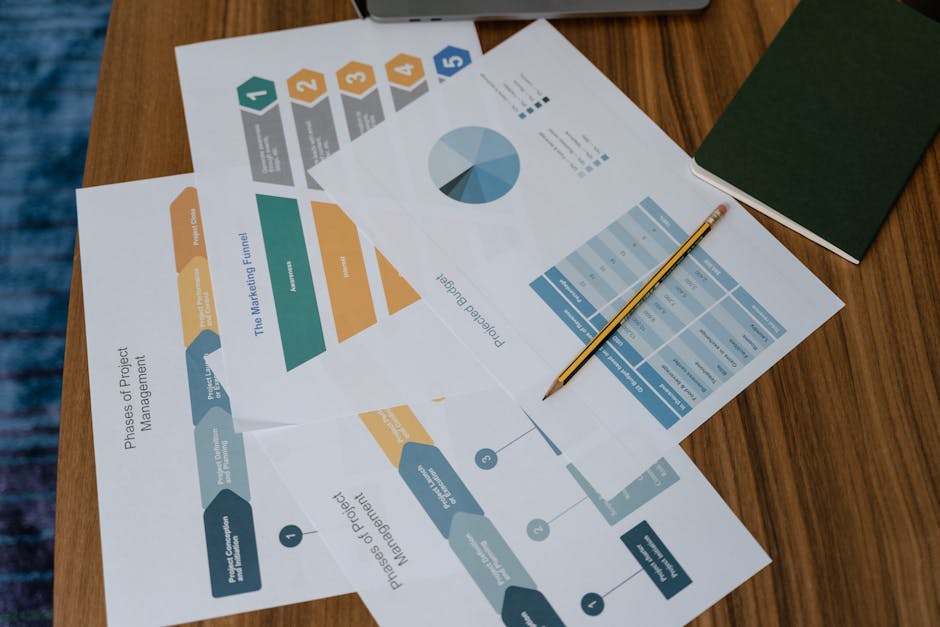
If you operate both an online store and physical location, you need consolidated reports to know where you’re really making money. This workflow is essential if you want to scale intelligently.
Automatic reporting setup:
Step 1: Define the KPIs you need to see daily or weekly:
- Total sales (online + offline).
- Best-selling products (by category, color, size).
- Average order value.
- Return rate (%).
- Aging inventory (seasonal clothing).
- New vs repeat customers.
Step 2: In n8n or Make, configure a scenario that daily/weekly (as needed):
- Extracts data from Shopify (sales, products, customers).
- Extracts data from your physical POS (if you have API integration or Google Sheet).
- Consolidates both sources in a Google Sheet or dashboard (Data Studio).
Step 3: Generate automatic visualizations. If you use Google Data Studio (native integration in Make), create charts for:
- Sales by clothing category (shirts, pants, dresses, accessories).
- Size heatmap: which sizes sell most? This helps you plan future purchases.
- Customer trend: are you gaining or losing new customers?
Step 4: To automate business invoicing, use Make to:
- Automatically generate invoice PDFs after each sale.
- Automatically send invoices to accounting.
- If you use accounting software (FreshBooks, Wave), automatically sync invoices.
💼 Business Insight: Most clothing businesses fail not from poor sales management but from poor data management. If you know which colors/sizes sell in-store vs online, you can optimize purchases and reduce returns by 20-30%.
Downloadable Templates: 5 Ready-to-Copy Workflows
We’ve covered the theory. Now let’s get practical. Here I provide ready-to-use templates. You only need to:
- Copy the template to your Make or n8n account.
- Connect your accounts (Shopify, Gmail, etc.).
- Activate and let it run.
Template 1: Physical Store – Online Inventory Synchronization
This template assumes your physical store has a Google Sheet updated hourly with stock. The workflow automatically syncs to Shopify.
- Trigger: Google Sheets – Watch Rows
- Filter: If stock changed (value comparison)
- Action: Shopify – Update Product Variant
- Logging: Google Sheets – Append Row (in an audit sheet)
Template 2: Low Stock Notification + Supplier Reorder
Detects when a product drops below minimum and automatically notifies.
- Trigger: Schedule (every 6 hours)
- Action 1: Shopify – Get Product Variants (current stock)
- Filter: If stock < configured minimum
- Action 2: Email to manager + Email to supplier (with template)
- Action 3: Mark in CRM as “On Reorder”
Template 3: Abandoned Cart with Retargeting
Make + Shopify + ActiveCampaign integration to recover abandoned carts.
- Trigger: Shopify – Abandoned Checkout
- Action 1: ActiveCampaign – Create Contact
- Action 2: Start email sequence (Email 1: urgency, Email 2: discount, Email 3: final offer)
- Action 3: Create Facebook Audience (for ad retargeting)
Template 4: Automatic Responses on Instagram + WhatsApp with AI
ChatGPT categorizes messages and responds automatically (or escalates to a human if needed).
- Trigger: Instagram DM or WhatsApp Message
- Action 1: OpenAI – Analyze message (category: stock, shipping, sale, complaint)
- Action 2: If sale: get SKU, check Shopify stock, respond with availability
- Action 3: If complaint: create ticket in CRM and notify manager
- Action 4: If stock: respond with sizing guide + photos
Template 5: Weekly Automatic Report Dashboard
Every Monday, receive an email with complete analysis of the previous week.
- Trigger: Schedule (Monday at 8 AM)
- Action 1: Shopify – Get Orders (last 7 days)
- Action 2: Google Sheets – Extract physical store data
- Action 3: Calculate KPIs (sales, average order value, return %)
- Action 4: Create visual in Google Data Studio
- Action 5: Send email with summary + charts
📥 Download Templates: Access our template library on Make Community or n8n Hub. Search “template automate clothing” and you’ll find optimized versions of each workflow (requires free account on the platform).
Troubleshooting: Common Errors When Automating Clothing Businesses
Problem 1: Inventory synchronization is slow or fails
Likely cause: You have too many products (>5,000) and Make is taking longer than expected.
Solution: Split into multiple scenarios by category (one for shirts, another for pants, etc.). Or use n8n Cloud with a dedicated instance (more power).
Problem 2: Abandoned cart emails aren’t sending
Likely cause: You haven’t enabled “Abandoned Checkouts” in Shopify, or Make doesn’t have permissions.
Solution: In Shopify, go to Settings > Checkout > Abandoned Checkouts and enable it. Then reconnect Make to Shopify (revoke and grant permissions again).
Problem 3: Customers receive the same email multiple times
Likely cause: Your workflow trigger fires multiple times, or ActiveCampaign isn’t properly synced with Make.
Solution: Add a de-duplication filter. In Make, use “de-duplication” by email or order ID to ensure each cart only triggers the workflow ONCE.
Problem 4: Physical and online store data don’t match
Likely cause: Your physical store Google Sheet updates every 2 hours, but Shopify syncs every 30 minutes. There’s a time lag.
Solution: Sync everything at the same frequency. If your POS updates every 2 hours, configure Make for every 2 hours as well. Or invest in a POS with real-time API (less manual work, better accuracy).
Problem 5: Make/n8n is becoming too complex and you don’t understand what’s failing
Likely cause: You’ve connected too many modules without documentation.
Solution: Add notes to each module explaining what it does. In Make, use the comment button. In n8n, document in a Google Sheet what connections you have, what the logical flow is. This saves hours of debugging.
Integration with Your Broader Business Strategy
Until now we’ve discussed individual workflows. But automating a clothing business is an integrated effort. If you only automate inventory but your email marketing remains manual, or if you automate sales but reports are still manual, you’re not truly optimizing.
Remember that our previous article AI Workflows for automating a clothing business in 2026: inventory, sales and customers covers complementary topics. If you haven’t read it yet, we recommend starting there to understand the complete vision.
Also, if you have a small business beyond clothing, our guide Automate a small business without code in 2026: Complete guide with 5 ready-to-copy workflows has universal applications (logistics, payments, customer support).
Comparison: Make vs n8n Cloud for Your Clothing Business
Both platforms are excellent. The question is: which to choose? It depends on your situation:
Choose Make if:
- This is your first time automating. Make is more intuitive.
- You need quick integration with Shopify and email marketing (has native integrations).
- Your budget is tight but transaction volume is low (<1,000 operations/month).
- You prefer pure drag-and-drop, no code.
Choose n8n Cloud if:
- You already have technical experience or have a junior developer on team.
- You need maximum flexibility and control (n8n allows JavaScript code).
- Your transaction volume is high and you want to reduce costs (n8n is cheaper at scale).
- You prefer self-hosted for privacy/sensitive data reasons.
Choose ActiveCampaign if:
- Your main focus is email marketing and CRM (not general automation).
- You’re already using it and want to leverage native automations (without Make/n8n).
- You need advanced behavioral customer segmentation.
For most small to medium clothing businesses, Make is the sweet spot: low learning curve, robust Shopify integrations, accessible pricing.
Roadmap: How to Implement Step-by-Step Without Overwhelm
Don’t try to implement all 7 workflows at once. Here’s the recommended roadmap:
Week 1: Workflow 1 (Inventory Synchronization). It’s the most critical. Done right, it saves 3-4 hours weekly.
Week 2: Workflow 2 (Low Stock + Reorder). Connect with workflow 1 for maximum effectiveness.
Week 3: Workflow 4 (Instagram/WhatsApp Auto-Responses). You’ll see quick conversion (more sales in days).
Week 4: Workflow 5 (Abandoned Cart). Start recovering money that was lost.
Week 5-6: Workflow 3 (Returns) + Workflow 7 (Reports). More complex, but by now you have momentum.
Week 7-8: Workflow 6 (Reviews/Feedback). Fine-tuning and optimization.
Estimated Impact: Real Numbers
How much time and money can you save? Based on real clients we’ve seen implement these workflows:
- Time savings: 12-15 hours/week (depending on operation size). At $20/hour, that’s ~$1,200-1,500/month in recovered time.
- Return reduction: 15-25% fewer returns (better stock info, improved descriptions through auto-feedback).
- Sales increase: 8-12% more sales (mainly from recovered abandoned carts and better customer support).
- Better cash flow: Stop freezing money in unsold inventory (smart inventory optimization).
If your business generates $10,000/month, implementing these workflows could result in:
- +$800-1,200 from abandoned cart recovery (12% increase).
- -$500-750 from reduced returns (cost savings).
- +$1,200-1,500 value of time saved.
- Total: +$2,500-3,450/month positive impact.
⭐ This is just an estimate. Some clients see even greater impact (especially if their online store had zero automation). Others see less (if some processes were already optimized). But we rarely see negative impact.
Next Steps and Recommended Resources
You have a plan. Now take action:
- Step 1: Create a free account on Make.com (you get 1,000 operations/month free).
- Step 2: Import Template 1 (Inventory Synchronization) from Make Community.
- Step 3: Connect your Shopify and Google Sheet, and activate. Takes 20 minutes.
- Step 4: In 5 days you’ll have saved more hours than it took to set up.
For larger businesses or complex needs, consider moving to n8n Cloud or bringing in an automation specialist (many of us work in the industry).
Conclusion: Your Automated Clothing Business is Possible Today
Five years ago, automating a clothing business required expensive developers and months of work. In 2026, anyone with an afternoon available can set up powerful workflows that handle inventory, sales, returns, and customer relationships.
The clothing business workflows we’ve covered here (inventory sync, low stock, returns, AI auto-responses, abandoned carts, feedback, reporting) are the heart of a scalable business. They’re not optional if you want to grow.
The difference between a business growing 20% yearly and one growing 100% yearly is often not the product—it’s operations. One has automated workflows. The other has people responding to emails manually.
Your action now: Pick one workflow (we recommend starting with Inventory Synchronization or Instagram Auto-Responses). Implement it next week. Measure the impact. Then automatically you’ll want to do more.
If you need help along the way, our complementary resources How to automate a small business with AI in 2026: Step-by-step guide without code and Automate a fast food business with AI in 2026: ready-to-implement workflows have universal principles. Or explore Automate business invoicing: Make.com 2026 vs n8n tutorial if you need to integrate accounting.
The future of clothing businesses is automated. Are you joining today?
Frequently Asked Questions (FAQ)
How do I automate inventory control in a clothing business?
Automatic inventory control in clothing requires 3 elements: (1) A synchronized data source (Google Sheet, POS system, or specialized software). (2) An automation platform (Make or n8n) that queries that source regularly. (3) Connection to your e-commerce (Shopify, WooCommerce) to update stock in real-time.
The workflow is simple: every X hours, Make checks your Google Sheet inventory, compares current stock to what Shopify shows, and automatically syncs. If stock drops below your reorder point, it automatically notifies your buying team. This prevents overselling and stockouts.
The ROI is huge: one hour/day saved on manual inventory management, plus zero overselling (which causes costly returns). To start, you need only Make (free for 1,000 ops/month), Shopify, and Google Sheets.
What workflows can I create to increase online clothing store sales?
The workflows with highest sales impact are: (1) Abandoned cart recovery (recovers 25-35% of incomplete carts). (2) AI auto-responses on Instagram/WhatsApp with AI (converts browsers to buyers). (3) Personalized recommendations based on purchase history (customer who bought shirts sees pants offers). (4) Welcome email for new customers (promo code -10% on first purchase). (5) Dynamic Facebook Ads retargeting (exact product they viewed).
Workflow #1 (abandoned carts) is fastest to implement and shows ROI in weeks. Only needs Make + Shopify + your email. The others require more data/integrations but potential is even higher.
How do I automate low stock notifications in my clothing business?
Automated low stock notifications save money. Setup: (1) Define reorder point per SKU (example: red shirt size M = minimum 10 units). (2) In Make, configure Schedule trigger that runs every 6-12 hours. (3) Check Shopify (Get Product Variants) and filter: if stock < reorder point, continue. (4) Action: Email your buying manager + email your supplier + mark as “On Reorder” in your CRM.
Bonus: Integrate ActiveCampaign to auto-create customer list who have that product favorited and send: “Coming Soon, we’ll notify you when available”.
Can I automate customer support on social media for my clothing store?
Yes, 100%. With OpenAI (AI) integrated into Make, you can: (1) Monitor Instagram DM and WhatsApp. (2) Each message is automatically analyzed with AI to categorize: Stock question? Shipping? Direct sale? Complaint? (3) Based on category, respond automatically or escalate to human.
Examples: Customer asks “Size M in the blue shirt?”. AI detects = stock question. Make automatically responds: “Hi! We have available. Here’s our sizing guide [link] + product photos [2 photos in sizes S, M, L]. What size are you?” with 2 product photos.
For complaints, AI detects negative tone and auto-escalates to manager via Slack or urgent email. This significantly improves customer satisfaction.
Which is better for automating a clothing business: Make or n8n?
For clothing businesses, we recommend Make as starting point. Reasons: (1) More user-friendly interface (visual drag-and-drop). (2) Native Shopify and email integrations (zero code needed). (3) Larger community = more templates/tutorials. (4) Affordable for SMBs ($9-99/month).
Use n8n if: You need maximum flexibility, have a developer on team, or high transaction volume wanting lower costs (n8n cheaper at scale). Also if you prefer self-hosted (your data stays yours, no third-party servers).
Most clients start with Make, and some migrate to n8n as they grow. For 80% of clothing businesses, Make is sufficient for 3+ years of operation.
Looking for more tools? Check our selection of recommended AI tools for 2026 →
AI Tools Wise — Our content is researched using official sources, documentation, and verified user feedback. We may earn a commission through affiliate links.
Explore the AI Media network:
Related reading: Top Herramientas IA.



![How to Create an AI Chatbot Without Coding in 2026 [Guide]](https://aitoolswise.com/wp-content/uploads/2026/02/how-to-create-ai-chatbot-without-coding-2026-768x512.jpg)