Every time you type a question into ChatGPT, send an email to Claude, or use any artificial intelligence tool, you’re consuming water. It’s not a metaphor. How AI consumes water is a question few users ask themselves, but it should concern anyone interested in planetary sustainability.
In 2026, a study published in Nature revealed that training a single large language model can consume up to 700,000 liters of water over its lifecycle. To put this in perspective: that’s equivalent to the drinking water consumption of 370 people for an entire year.
In this investigative guide, we’ll break down how much water artificial intelligence consumes, what it means for different regions of the planet, how tech companies are responding, and what concrete actions you can take today to reduce your own digital water footprint.
Why Does AI Consume Water and How Does This Process Work?
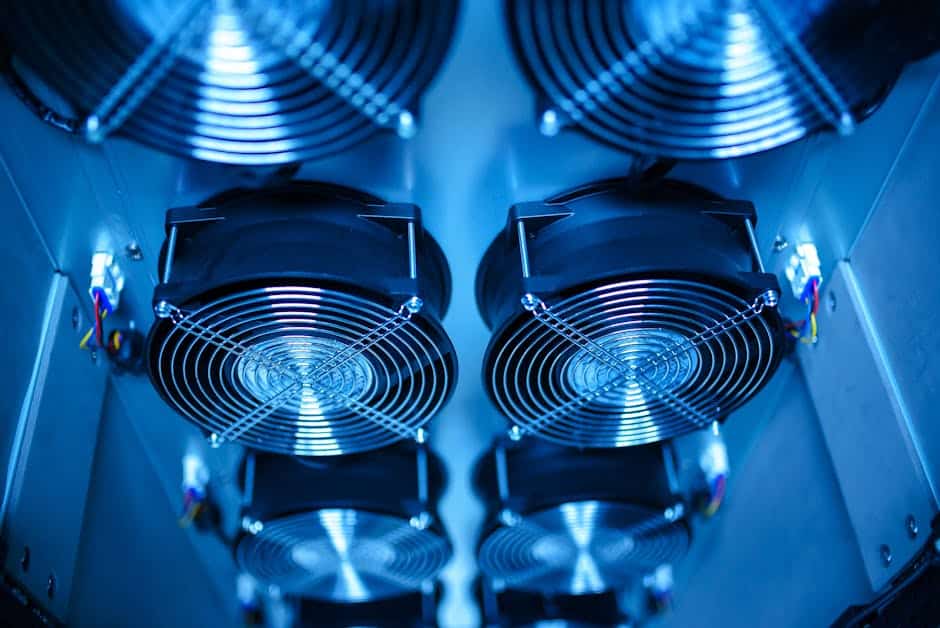
The connection between AI and water isn’t obvious at first glance. The reality is that the data centers that store and run artificial intelligence models require massive cooling systems.
When we process data, servers generate extreme heat. A single server can reach temperatures of 50-60°C without proper cooling, which would destroy it within minutes. Water-based cooling remains the most energy-efficient solution.
The Difference Between Water Consumption and Water Pollution
It’s crucial to understand that “consumption” and “pollution” are distinct problems. Consumed water is lost from the local cycle (evaporation), while polluted water returns to the ecosystem degraded.
With AI: we’re talking primarily about consumption (irreversible loss), not necessarily pollution. Though some data centers discharge hot water that affects aquatic ecosystems.
How Much Water Does Artificial Intelligence Really Consume: Verifiable Numbers
Data on how much water artificial intelligence consumes varies by source and model, but recent studies are alarming.
Water Consumption by AI Model (2025-2026)
| Model | Water per Training | Equivalent to… |
|---|---|---|
| GPT-4 | 700,000 liters | Annual consumption of 370 people |
| Claude 3 (Opus) | 500,000-600,000 liters | Annual consumption of 280-320 people |
| Llama 2 (70B) | 250,000 liters | Annual consumption of 135 people |
| Gemini Ultra | 620,000 liters | Annual consumption of 330 people |
Data compiled from 2024-2025 studies. Exact figures not published by companies are academic estimates.
Daily Production Consumption (Not Training)
Training is the most intensive phase, but production models also continuously consume water. Estimates suggest:
- ChatGPT consumes approximately 500-700 liters of water per every 1 million interactions
- Average Google search consumes 2-10 liters of water per search
- A 10-message conversation with ChatGPT consumes 10-50 liters of water
To visualize it: if you use ChatGPT for 30 minutes daily (approximately 50-100 interactions), you’re “spending” between 500-3,500 liters of water annually just on server cooling.
The Water Footprint of ChatGPT and Other Popular Models
Get the best AI insights weekly
Free, no spam, unsubscribe anytime
No spam. Unsubscribe anytime.
When we talk about ChatGPT water footprint, we need to analyze two distinct phases:
Related: How to Explain What AI Is to Someone Who Doesn’t Understand Technology: 2026 Guide
Phase 1: Training (One-Time Consumption)
GPT-4 training required approximately 700,000 liters of water according to calculations from Princeton’s Language and Intelligence Lab. This consumption occurred primarily in NVIDIA and Microsoft data centers located in:
- Silicon Valley, California: Region with severe water stress
- Puget Sound, Washington: Though it has more available water, it impacts salmon rivers
- Northern Virginia: Zone with moderate availability but growing demand
Phase 2: Continuous Operation (Permanent Consumption)
Every day, millions of users interact with ChatGPT. OpenAI doesn’t publish exact figures, but academic estimates suggest:
- ChatGPT consumes between 5-15 million liters of water daily globally
- This equals the consumption of 7,000-20,000 people simultaneously
- Annualized: 1.8-5.5 billion liters per year
Anthropic’s Claude has a potentially lower water footprint per user because its user base is smaller, but its data centers use similar cooling technologies.
Comparison: Is Using AI More Polluting Than Google Search?
This is a frequent question, and the answer is more nuanced than it appears.
One Google search consumes: 2-10 liters of water (Google 2023 data).
One ChatGPT interaction consumes: 5-50 liters of water (more complex than simple search).
On the surface, Google is more efficient. But consider:
- Google processes 8.5 billion searches daily
- ChatGPT processes 200-300 million interactions daily (estimated)
- Google optimized infrastructure over 25 years
- ChatGPT is still in optimization phase (18 months in mass production)
Verdict: Google is more efficient per interaction today, but the gap narrows with each optimization OpenAI and Anthropic make.
AI Environmental Impact by Geographic Region

The environmental impact of AI is not uniform. It depends entirely on where the data center is located and local water availability.
California: The Most Vulnerable Epicenter
Microsoft, OpenAI, and Google maintain massive data centers in California, a region facing structural drought since 2012.
Real impact:
- The Bakersfield aquifer (primary source for data centers) has dropped 300 meters in 40 years
- In 2026, California faced its worst drought in a decade, reducing water available for agriculture and household consumption
- Data centers (including cryptocurrency and AI) are estimated to have consumed 10% of available water in the Central Valley in 2026
Northern Virginia: Second Critical Region
Amazon and Google concentrate data centers here. Though Virginia has more water than California:
- The Potomac River, the primary source, serves 5 million people
- Climate projections indicate increasing droughts for 2030-2035
- Data center consumption grew 40% in three years
Europe: Emerging Water Stress
Meta and Microsoft have major data centers in Ireland, Sweden, and Iceland. Though these countries have abundant water, water stress is emerging:
- Iceland: Only location with cheap geothermal energy for cooling. But geothermal aquifers are being over-exploited
- Sweden: Unprecedented droughts in 2026 have limited capacity for new data centers
- Ireland: Conflicts with local communities over water use for data centers while aging infrastructure deteriorates
Middle East and Asia: Maximum Risk
China, United Arab Emirates, and Saudi Arabia are expanding AI capacity, but in regions with extreme water stress:
- China uses 70% of its water in agriculture, leaving little room for data centers
- United Arab Emirates desalinates water at an energy cost 5 times higher than fresh water
What Are AI Companies Doing About Water Consumption?
Public and regulatory pressure has begun generating responses. Here’s the actual state of corporate commitments.
OpenAI and Water Consumption: The Incomplete Response
OpenAI has been notoriously opaque about its water consumption. What we know:
- 2026: OpenAI began reporting sustainability metrics under investor pressure
- Promises: Committed to 100% renewable energy in new data centers by 2026
- Reality check: Renewable energy reduces carbon emissions, but DOES NOT solve water consumption
- Missing: No explicit commitments to reduce water consumption
Is OpenAI doing anything to reduce water consumption? Technically yes, but indirectly (through model optimization). Directly, it has not announced specific initiatives.
Google: Leadership in Reporting, Limited Advances
Google is the most transparent of major players:
- 2023: First published “water footprint” of data centers (500+ million liters annually)
- 2030 Goal: Reduce water consumption by 30% versus 2022
- Strategy: Investment in air-cooling towers in cold climates
- But: 30% reduction is insufficient considering expected AI growth
Anthropic (Claude): More Ambitious Commitments
Anthropic is smaller but has taken firmer positions:
- 2026: Committed to carbon neutral and water neutral by 2026
- Method: Reforest water basins equivalent to consumption (controversial in effectiveness)
- Transparency: Publishes quarterly water consumption reports
Microsoft: 2040 Water Neutral Promise
Microsoft announced an ambitious but distant goal in 2026:
- Be “water positive” (return more water than it consumes) by 2040
- Method: Basin restoration in water-stressed regions
- Problem: Commitments for 2040 are useless for the 2026-2030 crisis
Which Cities and Regions Are Most Affected by Data Centers

Data center water consumption is geographically concentrated. These are the most impacted regions:
Top 5 Cities with Greatest Water Stress from AI and Data Centers
| City | Country | Major Data Centers | Estimated Annual Consumption | Water Situation |
|---|---|---|---|---|
| Phoenix, Arizona | USA | Google, Meta | 800+ million liters | Critical (Colorado River over-exploited) |
| San José, California | USA | Google, Apple, OpenAI (partners) | 1,200+ million liters | Critical (recurring drought) |
| Northern Virginia | USA | Google, Amazon, Meta | 900+ million liters | Moderate-High (growing) |
| Dublin | Ireland | Meta, Google, Microsoft | 600+ million liters | Moderate (growing local pressure) |
| Reykjavik | Iceland | Microsoft, Cryptocurrency companies | 500+ million liters | Moderate (geothermal over-exploitation) |
Which cities are most affected by data center water consumption: Southwestern US cities (Phoenix, Las Vegas, Albuquerque) face maximum risk because they combine pre-existing water stress with accelerated digital infrastructure growth.
Related: AI for Designers in 2026: Canva Pro, DALL-E 3 and Tools That Work
How Can I Reduce My Water Footprint Using AI: Concrete Actions
Unlike other environmental problems, water consumption in AI can be reduced at the individual level. Here are verifiable strategies.
Level 1: Changes in Personal Use
1. More efficient tool usage
- Formulate clear questions requiring less processing (fewer tokens)
- Example: “Summarize in 100 words” vs “Explain in detail” saves 40-50% computational consumption
- Use “lite” mode or lighter versions when available
2. More efficient alternatives
- Use Google or Bing for simple searches (consumes 70% less water)
- Use Claude instead of GPT-4 for similar tasks (same results, less water)
- Use local models: Ollama, LLaMA run locally without data center water consumption
3. Reduce frequency
- Consolidate sessions (10 questions in one session vs 10 separate sessions = less overhead)
- Use search before AI for simple tasks
- Save useful answers instead of continuously regenerating
Level 2: Purchase and Subscription Decisions
4. Choose responsible providers
- Google Gemini: Google publicly reports water metrics
- Anthropic (Claude): More aggressive commitments to water reduction
- Avoid: AI tools without published sustainability commitments
5. Political and market pressure
- If you use ChatGPT, send feedback expressing water sustainability concerns
- Support legislation requiring water consumption reporting in data centers (some states already passed)
- Share water footprint information on social media (social pressure works)
Level 3: Collective Action
6. Support water restoration initiatives
- Donations to organizations restoring water basins in water-stressed regions
- California River Foundation
- Freshwater Trust
- The Nature Conservancy (water programs)
7. Education and outreach
- Share verified information about AI water consumption
- Challenge “green AI” narratives based only on renewable energy
- Demand tech companies be specific about water reduction plans
Does Sustainable or Ecological AI Exist: The Current Reality
The final question: Does sustainable or ecological AI exist? The answer is nuanced.
What Would “Sustainable AI” Require?
For AI to be truly sustainable, it would need:
- 100% water-free cooling: Air cooling in cold climates, closed-loop liquid cooling without evaporation
- 100% local renewable energy: Not just renewable, but produced without competing with local consumption
- 5x superior efficiency: Models requiring 5 times less processing for similar results
- Total transparency: Public, verifiable reports on water and water consumption
The Closest Thing to “Ecological AI” Today
Open models run locally:
- Ollama with LLaMA 2 (run on your computer)
- Consumption = only local electricity, no data center water
- Disadvantage: Requires powerful hardware, inferior performance to GPT-4/Claude
More efficient cloud models:
- Claude 3 Haiku (Anthropic’s “lite” version)
- Google’s PaLM 2-S (smaller than PaLM 2)
- 30-40% less consumption than full-size models
Data centers with innovation:
- Google: Using air cooling in cold climates (5% annual water reduction)
- Microsoft: Experimenting with underwater data centers (no terrestrial water, but marine ecology concerns)
The Verdict
Truly sustainable AI doesn’t exist in 2026. At most, there are “less unsustainable” options.
AI by nature requires:
- Massive processing = massive heat
- Massive heat = intensive cooling necessity
- Intensive cooling = water is the cheapest method
The solution isn’t “ecological AI” but water consumption regulation that forces real innovation.
Resource Recommendations for Deeper Exploration
If you want to research this topic further:
- “Making AI Less ‘Thirsty'” – Nature Water Journal (2026) – Definitive academic study
- Google Data Centers Sustainability Report – Publicly verifiable data
- Anthropic’s Water Neutral Commitment – Most progressive corporate position
- USGS Water Science School – Context on global water availability
Conclusion: How AI Consumes Water and What You Can Do Today
We’ve explored in depth how AI consumes water: from the molecular level of server cooling, to regional impact on specific cities, and the incomplete response of major corporations.
The data is clear: How AI consumes water is systematic, significant, and concentrated in regions already facing water stress. A single ChatGPT conversation might “cost” 50 liters in data center cooling.
Related: Claude Code vs ChatGPT: Which is Better for Programming with AI in 2026?
But you have power to act. The most impactful recommendations, in order of effectiveness:
- Use AI intelligently: Clear, consolidated, efficient questions
- Choose responsible providers: Prefer Google or Claude (better reporting and commitments)
- Support legislation and transparency: Regulatory pressure is more effective than voluntary commitments
- Share knowledge: Most users don’t know AI consumes water. Education is action
Call to action: This month, research water consumption in an AI tool you use regularly. Does it publish data? Does it have reduction commitments? If the answer is no, consider switching providers or expressing your concern directly. Small individual decisions, multiplied by millions of users, generate real pressure.
AI sustainability is not inevitable. It’s a decision we make every time we choose which tool to use and how we use it.
Frequently Asked Questions About AI and Water Consumption
Why does AI consume so much water?
AI consumes water because servers generate extreme heat (50-60°C) during processing. Water-based cooling systems are the cheapest and most efficient solution. Cooling towers evaporate water to dissipate heat, and this water doesn’t return to the local cycle, increasing net consumption.
How much water does ChatGPT use in each conversation?
An average 10-20 message ChatGPT conversation consumes between 10-50 liters of water. This depends on response complexity (tokens processed) and data center efficiency serving your request. For context: a typical shower uses 60-80 liters.
What is the real environmental impact of training an AI model?
The impact is multidimensional: consumes 500,000-700,000 liters of water (water consumption), generates 30-80 tons of CO2 equivalent (emissions), and requires special hardware creating e-waste. Water impact is least discussed but potentially most damaging in drought regions.
Do AI companies care about water consumption?
Partially. Google reports publicly. OpenAI is opaque. Anthropic has more ambitious commitments. Microsoft has distant goals (2040). Investor and legislator pressure is forcing progress, but commitments are insufficient for the scale of the 2026 problem.
How can I reduce my water footprint using AI?
Five strategies: 1) Use more efficient tools (Haiku vs Opus), 2) Clear questions requiring less processing, 3) Consolidate sessions, 4) Use search for simple tasks, 5) Express sustainability concerns to providers to force innovation.
Does sustainable or ecological AI exist?
True sustainable AI doesn’t exist in 2026. Closest options: small local models (LLaMA run locally) using only electrical energy, or cloud “lite” versions with reduced consumption (30-40% less water). True solution is regulation forcing companies to innovate.
Looking for more tools? Check our selection of recommended AI tools for 2026 →
Related article: Microsoft Integrates Copilot Pro in Windows 11: Everything About Native AI 2026
Related article: Runway AI 7.0: Revolutionizes Video Editing with Generative AI
If this topic interests you, don’t miss our guide on How Much Water ChatGPT and Claude Consume: The Real Environmental Cost in 2026.
The AI Guide — Our content is created from official sources, documentation and verified user opinions. We may receive commissions through affiliate links.
Explore the AI Media network:
Looking for more? Check out Top Herramientas IA.