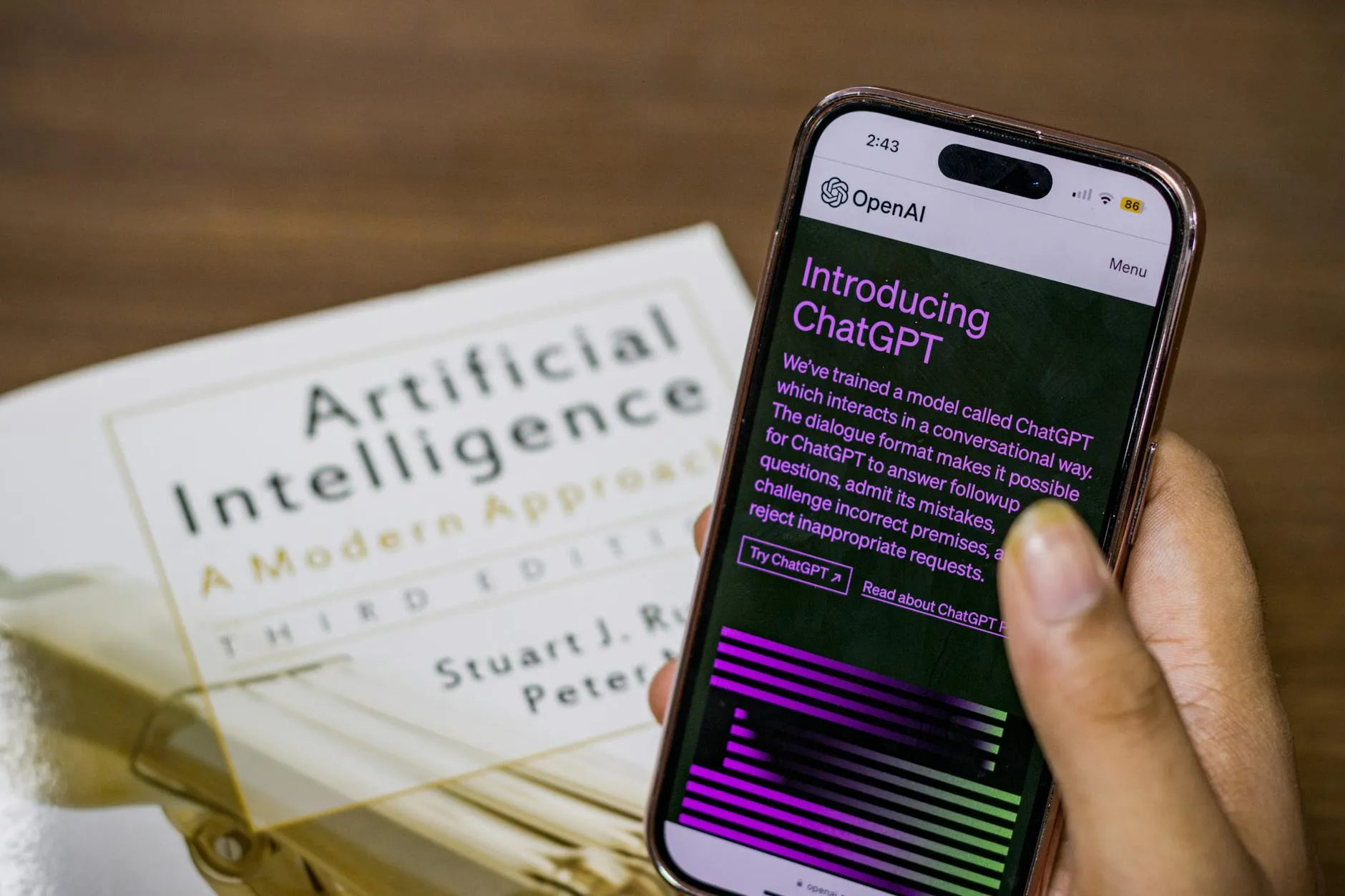

Introduction: AI Is Already in Your Life (Even If You Don’t Know It)
If someone asks you how to explain what AI is, you probably get stuck searching for terms like “algorithms,” “neural networks,” or “data processing.” But here’s the truth: explaining artificial intelligence doesn’t have to be complicated.
Since ChatGPT reached 100 million users in 2023, everyone wants to understand what this is. Your colleagues, your parents, your students. But 87% of people say they “don’t really understand AI.” And that’s because we’re using the wrong language.
In this guide, I’ll teach you how to explain AI to friends and family with real examples that work. No technical jargon. No complex terminology. Just analogies anyone can understand in 5 minutes.
What Is Artificial Intelligence in Simple Terms?
Imagine you teach a child to recognize dogs. You don’t give them a 500-page manual about canine biology. You show them 100 different dogs, and then the child can recognize a new dog they’ve never seen before.
That’s exactly what AI does.
Try ChatGPT — one of the most powerful AI tools on the market
From $20/month
Artificial intelligence is a computer program that learns from examples instead of receiving explicit instructions. Rather than programming every rule (“if it has 4 legs, then it’s a dog”), we show it thousands of images and the system discovers on its own what characteristics define a dog.
Watch: Explanatory Video
The Diligent Student Analogy
Think of AI as a very diligent student that:
- Studies millions of examples (while you study 10 pages, AI studies 10 million)
- Recognizes patterns that humans don’t see
- Continuously improves every time it encounters a new case
- Makes mistakes at first, but learns from them
The difference is that this student never gets tired, works 24/7, and can process information faster than any human.
Real Examples: Understanding AI Without Technical Jargon
Get the best AI insights weekly
Free, no spam, unsubscribe anytime
No spam. Unsubscribe anytime.
Example 1: Netflix’s Recommendation Engine
Netflix doesn’t have people watching what you watch to decide what to recommend. Instead, AI studies:
- What movies people like you watch
- When you pause or fast-forward
- What ratings you give
- What time of day you watch content
Then it predicts: “This person will probably love this movie because 50,000 similar people watched it and loved it.” It’s not magic, it’s probability at massive scale.
Example 2: Gmail’s Spam Filter
Google trains its AI by observing millions of emails. It learns that emails with words like “WIN $5,000 NOW” have a 99% probability of being spam. But it also knows exceptions: if your bank writes to you in all caps, it might not be spam.
AI doesn’t have rigid rules. It has flexible probabilities based on patterns.
Example 3: Your Phone Recognizing Your Face
Facial recognition works because AI has studied millions of human faces. It knows what distance there is between eyes, the shape of the nose, the curvature of the jaw. When you point your phone at your face, the system compares those numbers with what it stored on day one.
It doesn’t “understand” that it’s you. It simply compares numbers.
Explaining AI to Friends and Family: The Best Analogies
Analogy #1: The Improved Recipe
A cooking recipe is a traditional algorithm: “Mix 2 cups of flour, 1 cup of sugar, 3 eggs.” If you change an ingredient, everything falls apart.
AI is different. It’s like a chef who baked 10,000 cakes and now knows how to adjust ingredients based on:
- The altitude of the city (air pressure)
- The humidity
- The type of flour available
- Personal preferences
The chef doesn’t have written rules for each combination. He’s seen enough examples to know what will work.
Analogy #2: The Learning Mirror
Imagine a magical mirror that starts out terrible. You show it 1,000 action movies and 1,000 romantic movies. Then you ask it: “What movie would you recommend to me?”
The mirror says: “Based on what I’ve seen, I think you’ll like action movies.” And it’s right 85% of the time.
That mirror is AI.
Analogy #3: The Child in a Market
A child enters a market for the first time. Someone points to a red apple: “That’s an apple.” Then they see green apples, yellow apples, shiny ones, dull ones. Their brain learns: “Despite the differences, all those things are apples.”
AI works exactly the same way. After seeing 10 million varied examples, it recognizes new cases it’s never seen before.
What Exactly Is Machine Learning?
Machine Learning is the “how” of AI. It’s the method it uses to learn.
If AI is a general category (“making machines intelligent”), Machine Learning is the specific technique: letting the machine discover patterns on its own instead of manually programming every rule.
The 3 Types of Learning
- Supervised learning: AI learns from labeled examples. “This IS fraud” / “This is NOT fraud.” You show it 100,000 examples and it learns.
- Unsupervised learning: AI searches for patterns without you telling it what to look for. “Here are 1 million customers, group them intelligently.” The system discovers that 40% are occasional buyers and 60% buy regularly.
- Reinforcement learning: AI learns by playing. A chess program plays thousands of games against itself. Every loss teaches it to improve.
How Exactly Do Machines Learn?

Machines learn by adjusting internal numbers called “weights.” Imagine a giant mathematical equation.
At first, AI makes terrible predictions because its internal numbers are random. But after each prediction, it looks at the actual result and thinks:
“I failed. Let me adjust these numbers a little bit to do better next time.”
It repeats this a trillion times. After that, the system is surprisingly accurate.
Visual Example of Learning
| Iteration | AI’s Prediction | Actual Result | Error |
|---|---|---|---|
| 1 | Is spam (70%) | Not spam | Large ❌ |
| 50 | Is spam (55%) | Not spam | Medium ⚠️ |
| 500 | Is spam (25%) | Not spam | Small ✓ |
| 5000 | Is spam (3%) | Not spam | Minimal ✅ |
Can AI Really Think?
This is the million-dollar question. The honest answer: it depends on what you mean by “think.”
When you use ChatGPT and it answers a complex question, is it thinking? Technically, it’s doing what it learned from billions of words: predicting what word comes next after your question. One word. Then another. Then another.
It’s like when you read a text message and anticipate the next words because you’ve read millions of messages. You don’t call it “thinking,” but it’s a similar process.
The Illusion of Understanding
ChatGPT doesn’t “understand” that 2+2=4 the way you do. But it’s seen “2+2=4” so many times that it knows how to predict that answer correctly.
It’s like a parrot that learned to say “Good morning” when someone enters the door. The parrot doesn’t understand the concept of greeting, but it executes the correct action.
Here’s what’s important: To explain AI to non-technical people, you don’t need to solve this philosophical question. Just say: “AI is excellent at seeing patterns and predicting based on what it has learned. It doesn’t ‘think’ like you do, but it gives useful answers.”
Practical Tools to Demonstrate AI in Action
ChatGPT Plus: Conversational AI
If you want someone to really understand what AI is, show them ChatGPT Plus in action. Ask it complex questions:
- “Explain the theory of relativity to me as if I were an 8-year-old”
- “Write a poem about technology in Shakespearean style”
- “Analyze why my business could grow in 2026”
Seeing intelligent responses in real-time is 1,000 times better than any theoretical explanation. People go from “What is AI?” to “This is amazing!” in seconds.
Claude Pro: More Cautious Alternative
Claude Pro is another excellent tool. Some say its responses are more thoughtful and less prone to hallucinations. If your audience is skeptical, Claude can build trust.
Canva Pro: AI for Design
Show people how Canva Pro generates images using AI. Type: “An astronaut cat on Mars” and watch the images generated. It’s a tangible and fun example of what AI can do.
Facial Recognition Demonstrations
Open Google Photos and show how it automatically groups photos of the same face. Without anyone tagging anything.
How to Explain AI to Different Audiences
For Your Parents
Avoid: words like “algorithm,” “neural network,” “tensors.”
Use: “It’s like when you learned to recognize voices on the phone. After 1,000 calls from your sister, you recognize her voice instantly, even if she has a cold. That’s how AI learns, but 1,000 times faster.”
For Your Students
Make it interactive:
- Show a video of AI playing video games (DeepMind AlphaGo)
- Use Canva Pro to generate images
- Ask: “How do you think AI knows what the best move is?”
For Business Colleagues
Connect with ROI: “AI reduces costs in customer service, improves accuracy in demand forecasting, and personalizes customer experience. That’s why companies like Amazon and Netflix use it.”
The Most Common Mistakes When Explaining AI

Mistake #1: Comparing It to Human Intelligence
Don’t say: “AI is like the human brain.”
Do say: “AI is excellent at specific tasks we program it for, but it can’t have a coffee or understand why you feel sad.”
Mistake #2: Using Too Much Jargon
Words you MUST avoid with non-technical people:
- Convolutional neural networks
- Vectorization
- Backpropagation
- Hyperparameters
Mistake #3: Overpromising
Don’t say: “AI can do everything.” Do say: “AI is excellent at recognizing patterns in data, but we still need humans to make complex ethical decisions.”
Mistake #4: Ignoring Limitations
Be honest about what AI cannot do:
- It doesn’t have real emotions
- It doesn’t understand context the way we do
- It can make serious errors on complex tasks
- It requires quality data to work well
Actionable Tips for Explaining AI Effectively
Tip #1: Start With a Problem, Not the Technology
Bad: “AI uses neural networks to…”
Good: “Ever wonder how Netflix knows what to show on your home page? Millions of customers with different tastes, so how does it decide? Here’s where AI comes in…”
Tip #2: Use an Analogy, THEN Explain How It Actually Works
First: Simple analogy (the magic mirror)
Second: Practical details (watches millions of movies, recognizes patterns)
Third: Real case (Netflix, Spotify, TikTok)
Tip #3: Let Them Experiment
Don’t just talk. Show them. Open ChatGPT, generate an image in Canva Pro, use an Instagram filter. Let them play with AI for 5 minutes.
Experimentation beats explanation every time.
Tip #4: Connect It to Their Real Life
Don’t say: “Algorithms adjust weights via gradient descent.”
Do say: “You know how your phone suggests contacts when you type a number? That’s AI. It’s seen millions of numbers dialed, learned patterns, and now predicts which one you want to call.”
Tip #5: Be Honest About What You Don’t Know
If someone asks something technical and you don’t know, say: “Good question. Even AI experts debate that. But for our purposes, what matters is…”
Why People Are Afraid of AI
It’s normal for people to be afraid. But often the fear comes from ignorance, not actual danger.
Common Fears (and the Reality)
| Fear | Reality 2026 |
|---|---|
| “AI is going to replace me” | AI replaces repetitive tasks but creates new jobs. We need people to supervise AI. |
| “AI is conscious and will attack us” | Today’s AI isn’t conscious. ChatGPT has no motivations or intentions of its own. |
| “AI will steal my data” | The risk is real, but it comes from companies, not AI. Use trusted applications. |
| “AI will write poorly for me” | AI is a tool. You decide how to use it well or poorly. Like Google. |
Practical Exercise: 5-Minute Plan to Explain AI
If you have 5 minutes with someone asking “What is AI?”, follow this plan:
Minute 1: Analogy
“Imagine you’re a chef who baked 10,000 cakes. Now you know how to adjust ingredients without an exact recipe. AI is like that: it studies millions of examples and learns patterns.”
Minute 2: Real Example
“See how Spotify suggests songs to you? AI listened to what others listened to, saw they have similar taste to you, and predicts you’ll love this new song.”
Minute 3: Demonstration
Open ChatGPT on your phone. Type: “Give me 3 reasons why AI is useful.” Show the response in 20 seconds.
Minute 4: Limitations
“But AI isn’t magic. It doesn’t understand emotions, can make mistakes, and needs good data to work.”
Minute 5: Closing
“AI is here. You use it daily already. The future is learning to use it well, not being afraid of it.”
Recommended Resources to Learn More
- For visuals: “3Blue1Brown” on YouTube has videos about neural networks without technical jargon
- For interactive: TensorFlow Playground lets you see how a neural network “learns” in real-time
- For business: Read real case studies on how Netflix, Amazon, and Tesla use AI
- For practice: Create your free ChatGPT account and experiment
Frequently Asked Questions (FAQ)
How do I explain AI to my grandmother?
Use an analogy she understands. For example: “It’s like when you learned to recognize a ripe apple by its color. After 50 years, you do it without thinking. AI does something similar, but in seconds, with millions of examples.” Then show her something tangible: how Google Photos automatically groups her old photos by person.
What’s the best analogy for understanding AI?
There isn’t one “best” analogy. It depends on the person. For parents: “A student who studied millions of books.” For business: “A tool that predicts patterns in data.” For creatives: “A collaborator who learns your preferences.” Use the one that resonates with your audience.
What’s the difference between AI and chatbots?
A simple chatbot responds with rules: If question = “What time is it?”, Response = [current time]. It’s rigid. A conversational AI like ChatGPT learns from millions of human conversations, understands context, and generates unique responses. It doesn’t just follow rules; it generates new ideas.
Why are people afraid of AI?
Because they don’t understand it. Fear of the unknown is natural. Plus, science fiction movies don’t help. But in reality, AI in 2026 is a tool, not a conscious entity. Once people understand how it works (learns from data, recognizes patterns, predicts), fear decreases significantly.
How can I demonstrate that AI is real with examples?
Here are 3 demonstrations that impress:
- ChatGPT: Open the site, type a complex question, show how it responds intelligently in seconds
- Google Photos: Open your gallery, use facial search (search “my face”) and it will automatically group all your photos without you tagging anything
- Canva Pro: Generate an image by typing a descriptive text in the AI generator
Conclusion: Your Guide to Explaining AI Without Technical Jargon
Now you know how to explain what AI is to people without technical knowledge. The key is:
- Use analogies people already understand (chef, mirror, student)
- Connect with examples from their real life (Netflix, Gmail, facial recognition)
- Demonstrate, don’t just talk (show ChatGPT, Canva Pro, Google Photos in action)
- Be honest about limitations (it’s not magic, it doesn’t think like you)
- Simplify aggressively (eliminate words like “algorithm” and “neural network”)
Explaining AI to friends and family doesn’t have to be intimidating. Anyone can understand it if you use the right language.
The next step: Open ChatGPT Plus or Claude Pro right now and experiment. Then teach someone else. The best way to learn is by teaching. And the best way to explain is by having played with the tool yourself.
Still have doubts? Remember: even AI experts are still discovering new things. What matters is that you now have the right mental framework. How to understand AI without technical jargon is possible, and you just learned how to do it.
Looking for more tools? Check our selection of recommended AI tools for 2026 →
AI Tools Wise — Our content is researched using official sources, documentation, and verified user feedback. We may earn a commission through affiliate links.
Explore the AI Media network:
You might also enjoy AutonoTools.